Overview
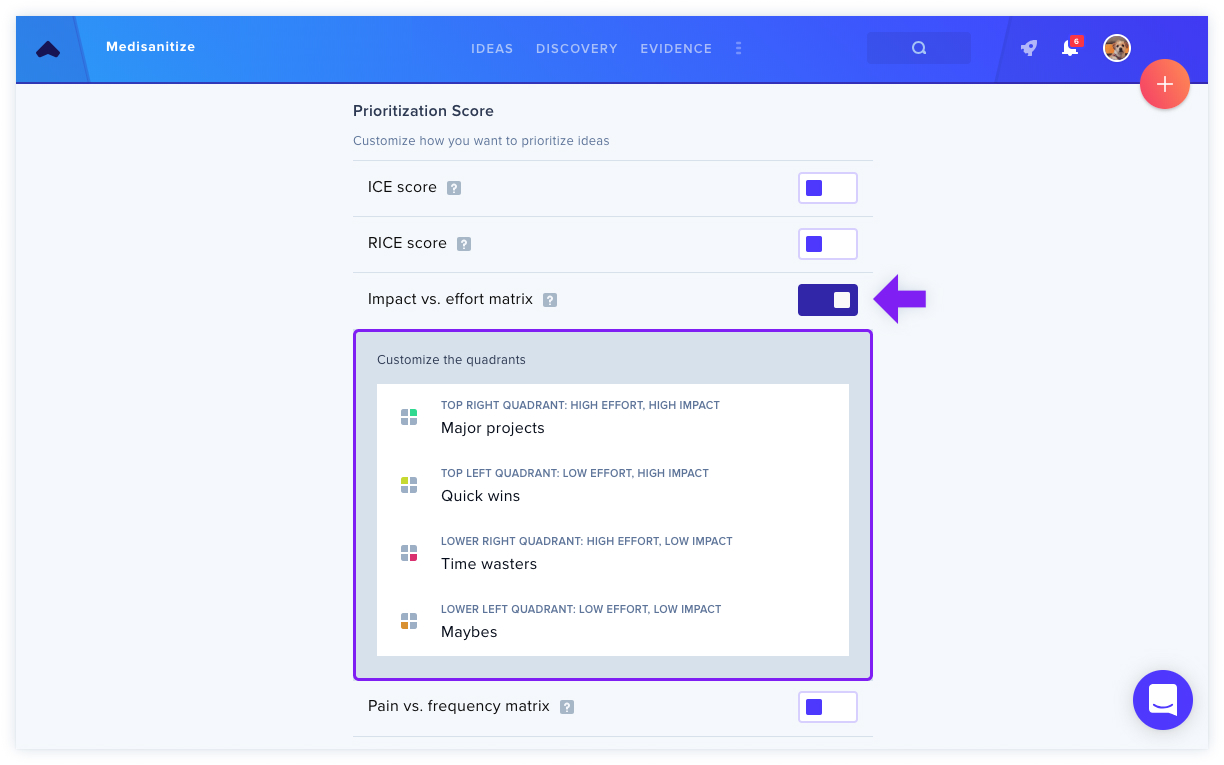
Impact vs. Effort is a matrix-style assessment weighing the effort required to build and launch against the level of impact. It's also known as "Value vs. Complexity." The four quadrants are:
- Top right (high effort, high impact): Major projects that will move the needle for users, requiring thorough discovery work.
- Top left (low effort, high impact): Quick wins, good candidates for early experimentation.
- Lower right (high effort, low impact): Time wasters to avoid.
- Lower left (low effort, low impact): Maybes that shouldn't take priority over quick wins, though multiple maybes together can create great experiences.
When to Use Impact vs. Effort:
Use Impact vs. Effort when your team doesn't feel the need to differentiate between reach and impact (as done in RICE), or have a variable for confidence.
Note: By omitting confidence measures, teams risk overestimating impact and underestimating effort. See Itamar Gilad's article (opens in new tab) on limitations of this approach.
How it Works in GLIDR
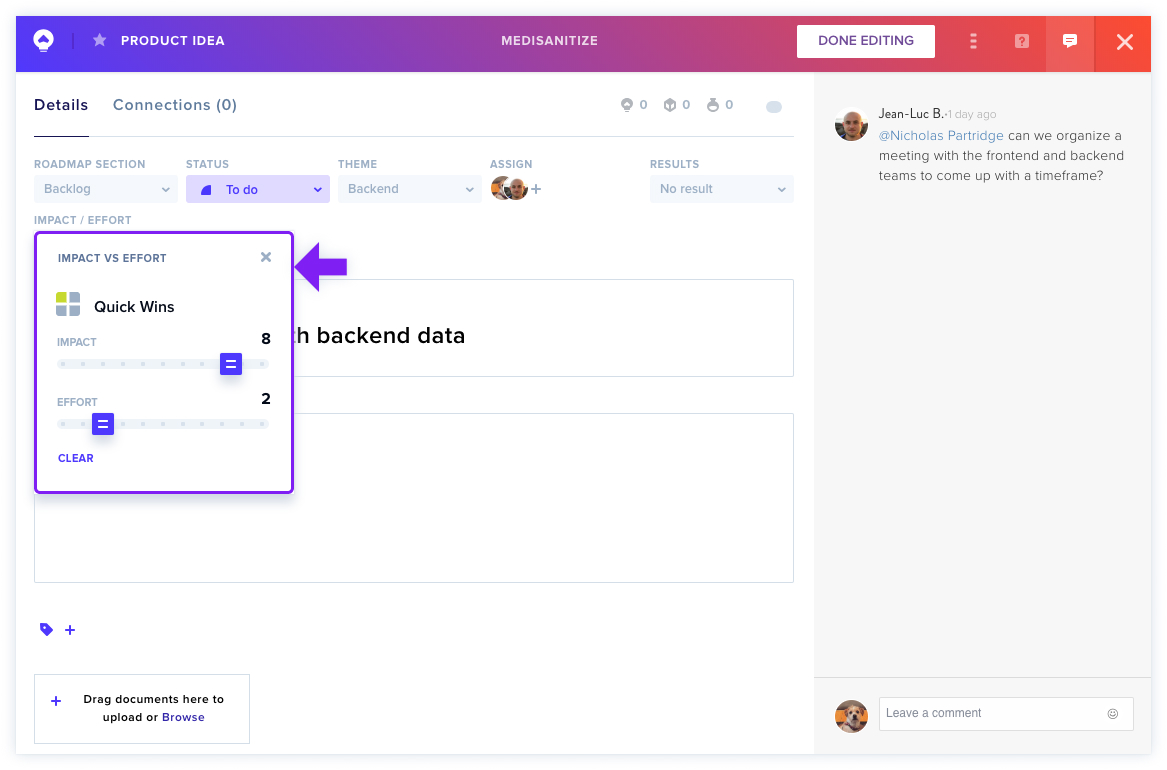
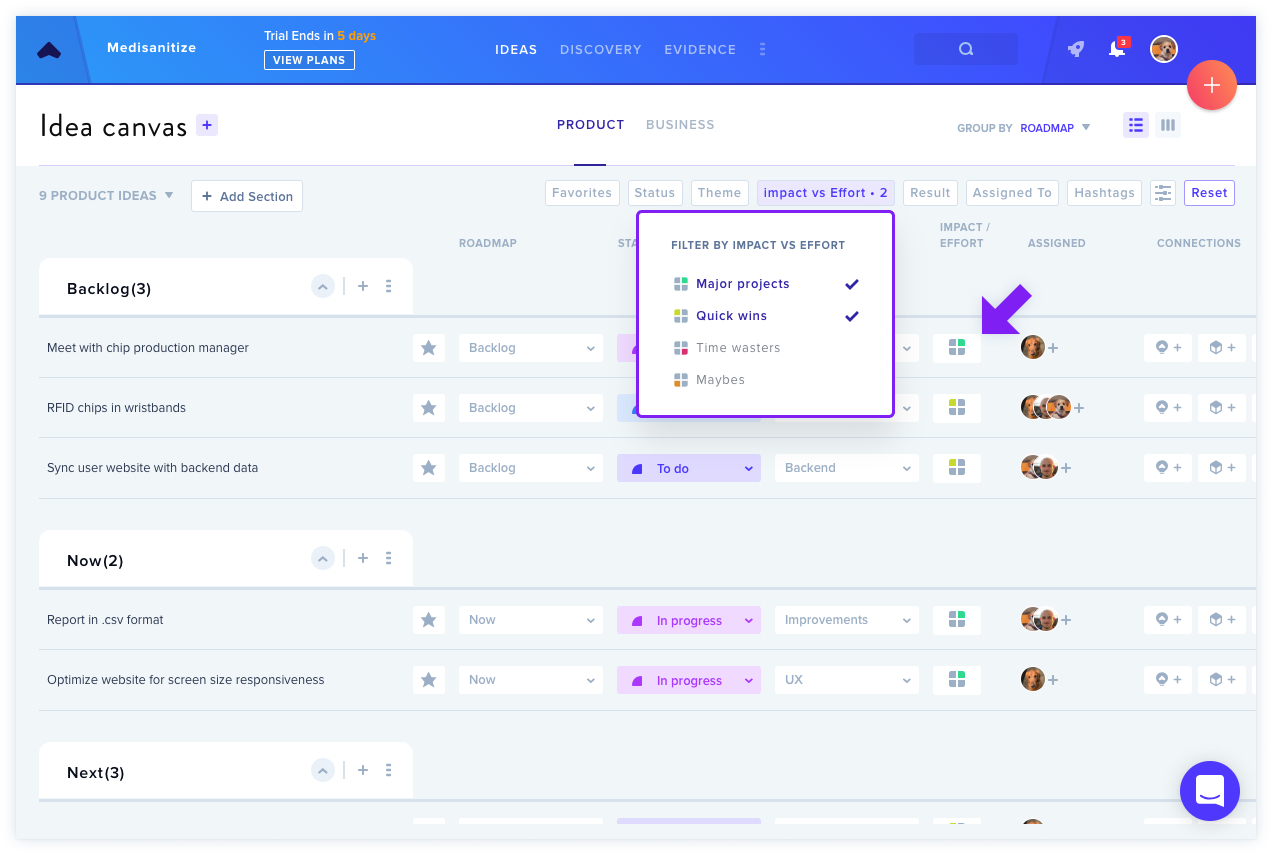
Assign scores to Ideas from within Idea cards or in List View. Sliders automatically categorize Ideas into quadrants. Filter by quadrant in List View to prioritize quick wins or move time wasters to backlog.
Setting Up Prioritization Scoring
Prioritization scoring is off by default in every tier. On Garage, Business, and Enterprise alike, go to Project Settings > Product Ideas to enable Impact vs Effort scoring (Admins and Owners only). Customize quadrant names to match your system. Once enabled, scoring appears in Idea cards and List View.