
Overview
RICE represents a scoring formula: (Reach x Impact x Confidence) / Effort, created by Intercom's team. The framework defines:
- Reach — Number of people impacted within a specific timeframe
- Impact — Effect magnitude per person (Massive = 3x, High = 2x, Medium = 1x, Low = 0.5x, Minimal = 0.25x)
- Confidence — Estimate reliability (High = 100%, Medium = 80%, Low = 50%)
- Effort — Required "person-months" (customizable in GLIDR)
When to Use RICE:
RICE distinguishes between impact and reach — unlike ICE scoring — making it ideal when evaluating "high impact for small audience" versus "low impact for broad audience" scenarios. Companies like Airbnb employ this system for structured prioritization. As noted by Airbnb's Pratik Shah: "we use the RICE scoring system to help us create a common, quantitative, relatively objective baseline."
How It Works in GLIDR
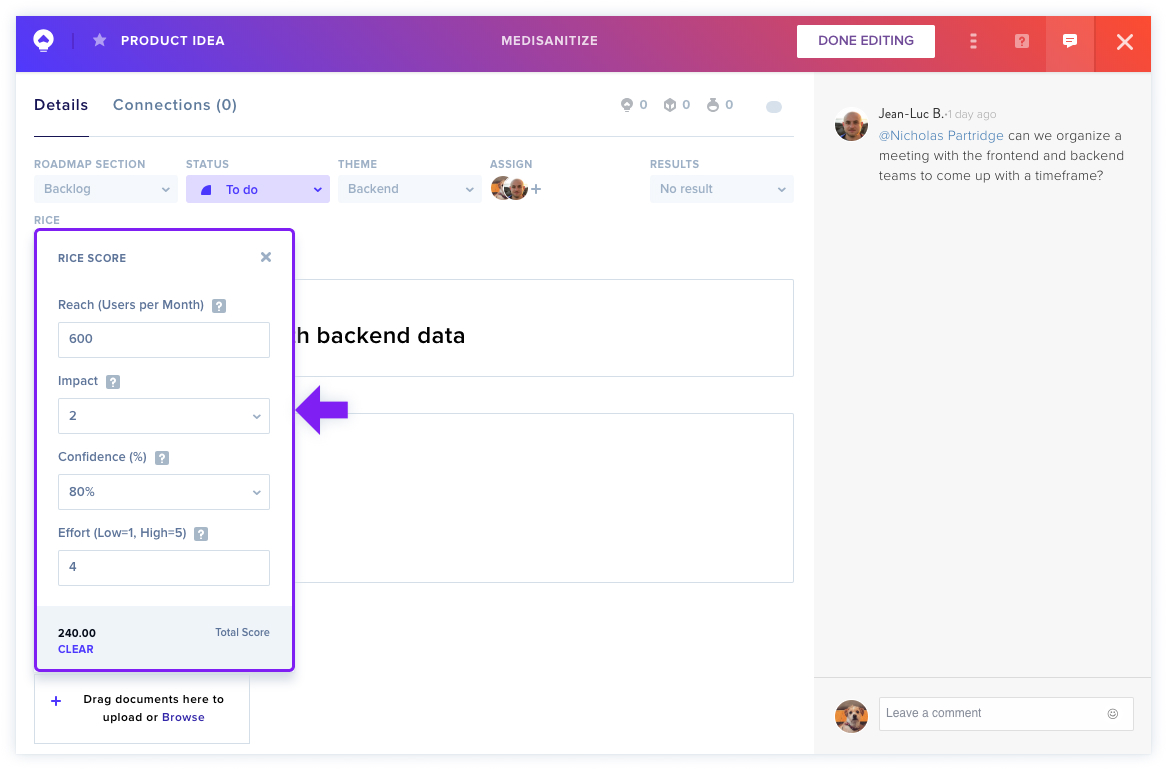
Assign RICE scores to Ideas through Idea cards or inline in List View. The platform automatically calculates the composite score when values update. Effort values are unlimited rather than scale-restricted.
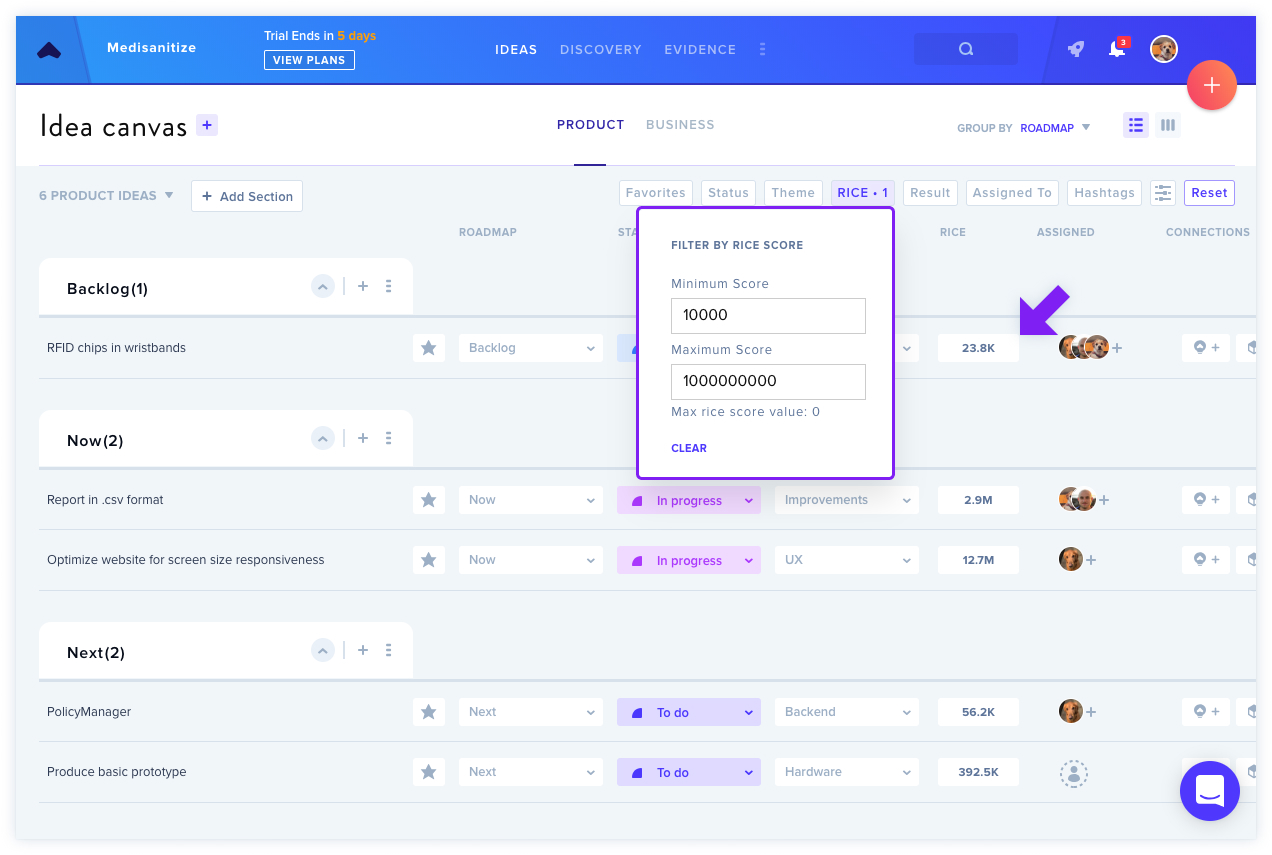
Filter by Product Score in List View, selecting score ranges to organize Ideas — moving low-scoring items to backlogs and prioritizing higher-scoring features.
Setting Up Prioritization Scoring
Prioritization scoring is off by default in every tier. On Garage, Business, and Enterprise alike, go to Project Settings > Product Ideas to enable or disable RICE scoring (Admins and Owners only).
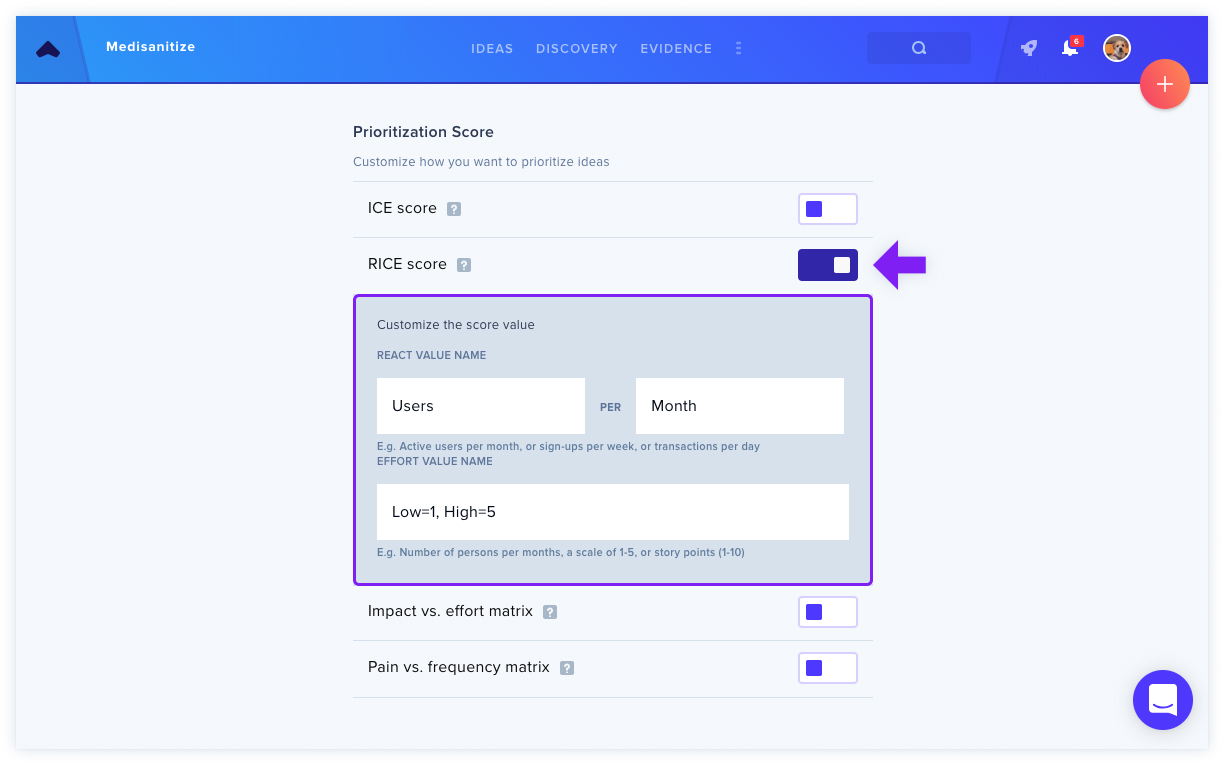
Customizable fields allow teams to rename Reach (e.g., "active users per month") and Effort metrics to match their methodology.