
Overview
The Pain vs. Frequency Matrix evaluates how often a user experiences a problem and how intense the problem is when experienced. This scoring approach differs from others by focusing exclusively on customer perspective without considering internal variables like confidence or effort.
The matrix divides into four quadrants:
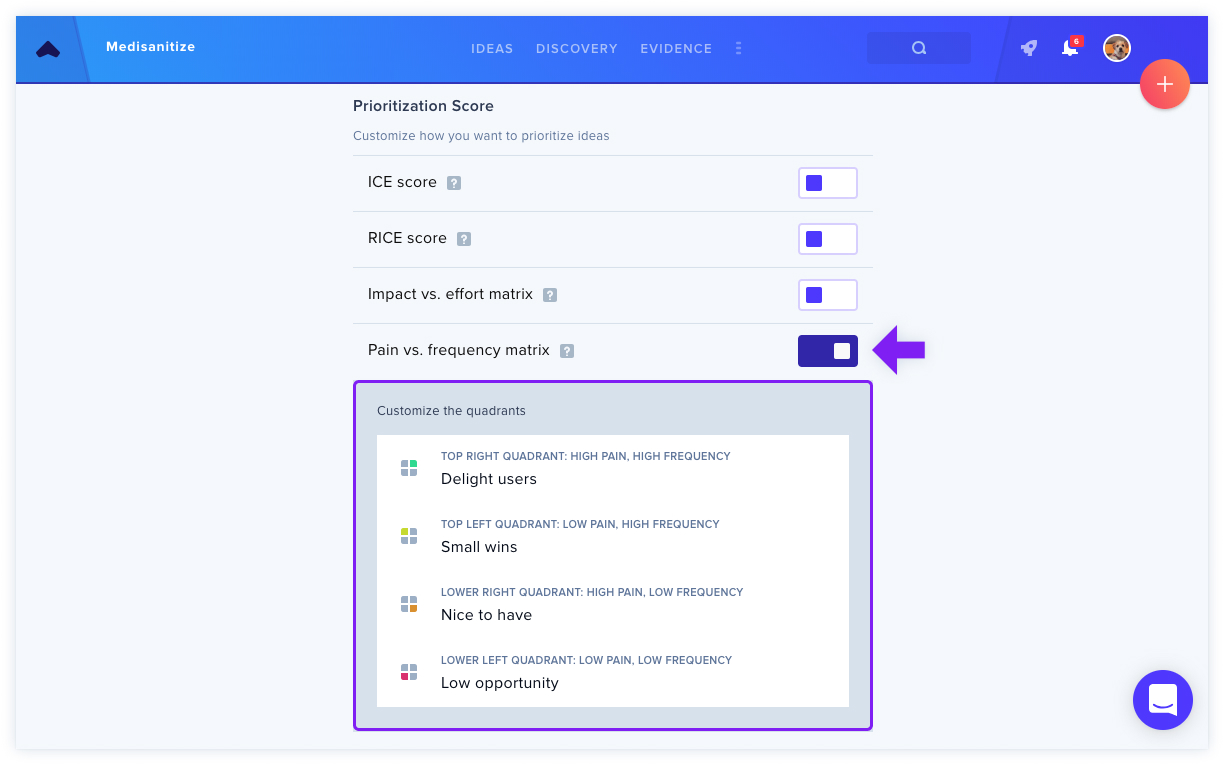
- Top right (high pain, high frequency): High-value problems yielding "delighters"
- Top left (low pain, high frequency): Frequent irritants offering "small wins"
- Lower right (high pain, low frequency): Important but infrequent problems producing "nice to have" features
- Lower left (low pain, low frequency): Low-priority "low opportunity" problems
When to Use Pain vs. Frequency
This tool works best when your roadmap is more focused on fixing pain points and you want a simple two-variable assessment tool. It complements RICE scoring by emphasizing external factors over internal constraints.
How It Works in GLIDR
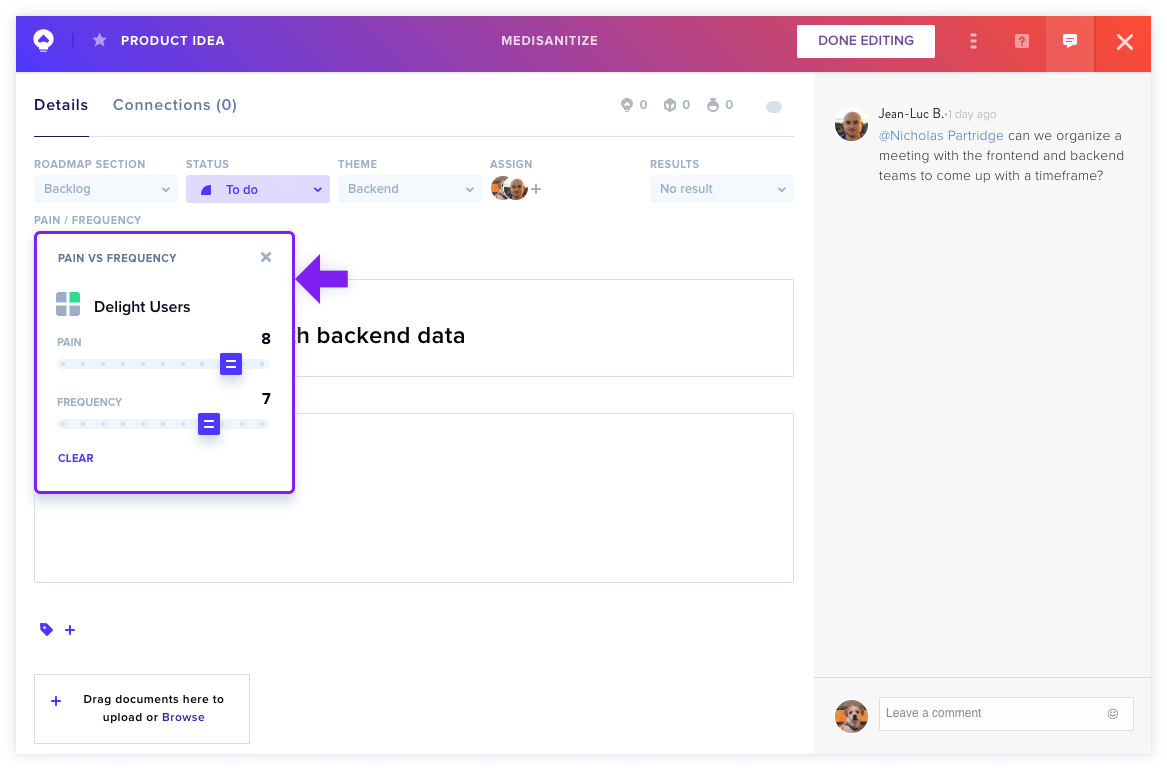
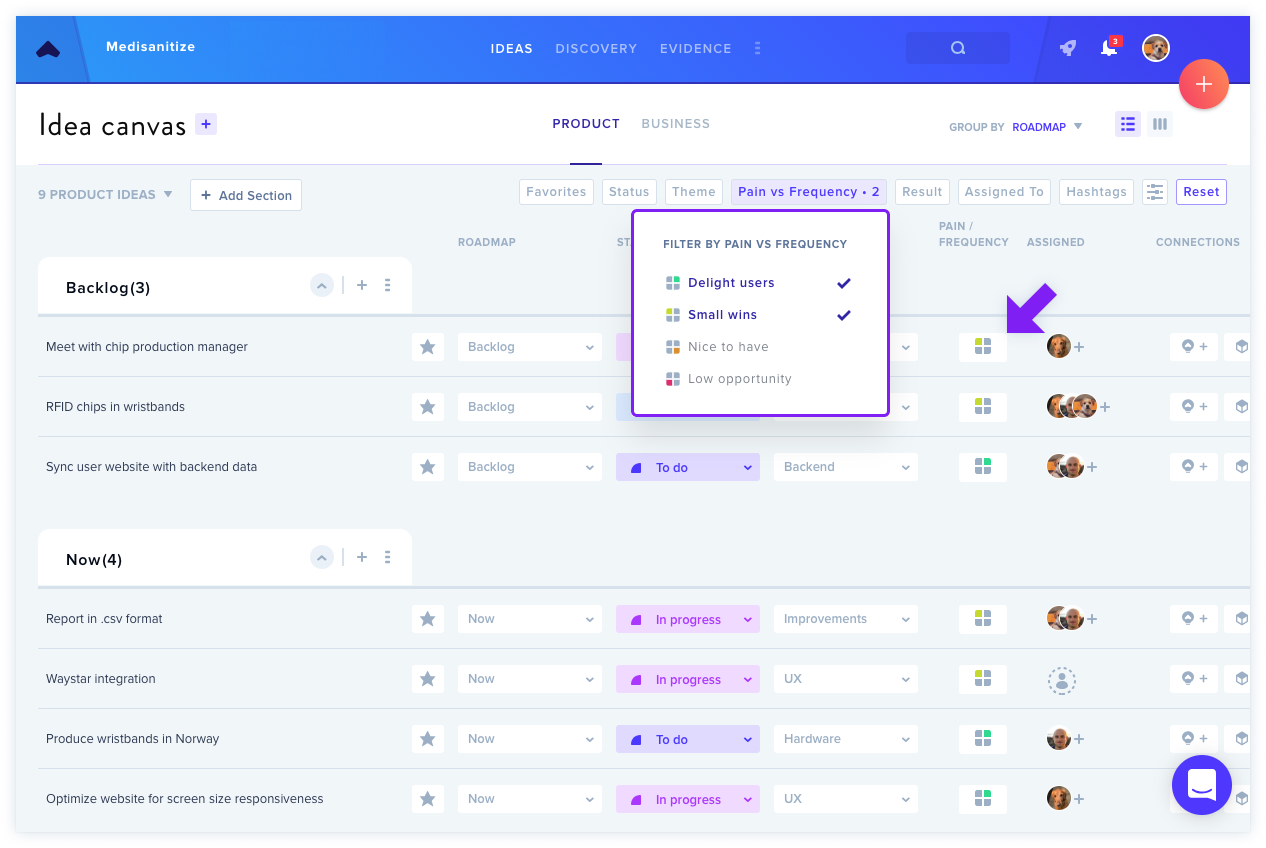
Assign Pain vs. Frequency scores via idea cards or list view using adjustable sliders. The system automatically categorizes ideas into the four quadrants. Filtering capabilities allow teams to isolate specific quadrants for prioritization decisions.
Setup Instructions
Prioritization scoring is off by default in every tier. On Garage, Business, and Enterprise alike, go to Project Settings > Product Ideas to enable or disable Pain vs. Frequency scoring and customize quadrant names (Admins and Owners only).